
← Back to Archive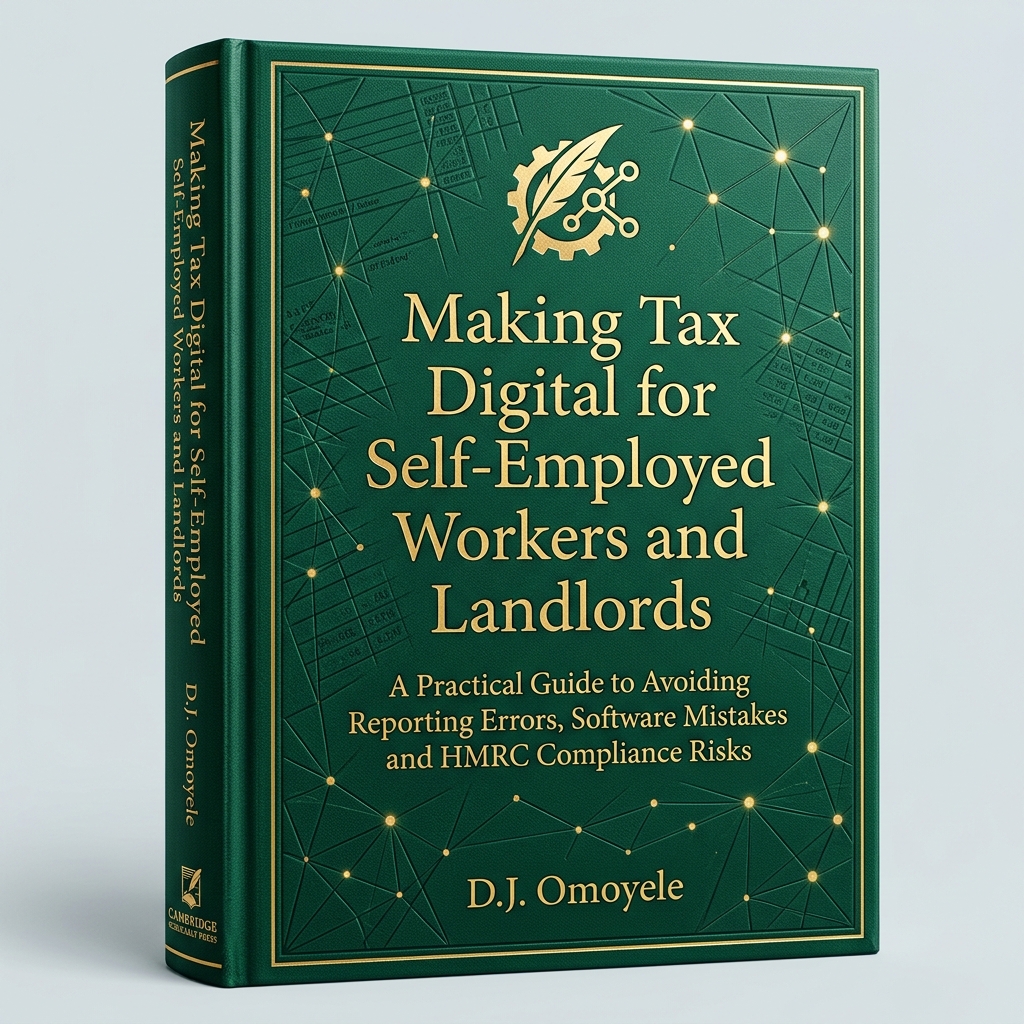
Books / Handbooks • 2026
Making Tax Digital for Self-Employed Workers and Landlords: A Practical Guide to Avoiding Reporting Errors, Software Mistakes and HMRC Compliance Risks
JD
Economist & Senior Data Analyst · ORCID: 0009-0006-0347-0499
Published in: Independently Published
Abstract
A practical guide to HMRC's Making Tax Digital for Income Tax Self Assessment (MTD-ITSA) regime, written for self-employed workers, landlords, and their professional advisers. From April 2026, self-employed workers and landlords with gross qualifying income above £50,000 are required to maintain digital records and submit quarterly updates to HMRC using approved software. The book covers: the distinction between quarterly updates and tax returns; scope and threshold calculations; the full MTD compliance year including quarterly submissions and year-end adjustments; common income and expense recording errors; software misclassification risks across QuickBooks, FreeAgent, and Xero; legitimate expense claims frequently under-claimed; capital allowances and year-end adjustments; compliance risk signals and HMRC's Connect system; record-keeping templates; and a thirty-day action plan for the first quarterly deadline. The book draws on HMRC's published administrative data, including the Measuring Tax Gaps 2025 report, and situates MTD within the broader context of UK tax gap reduction policy.
Video Presentation
Watch directly on YouTubeDetailed Overview & Outline
A practical guide to HMRC's Making Tax Digital for Income Tax Self Assessment (MTD-ITSA) regime, written for self-employed workers, landlords, and their professional advisers.
From April 2026, self-employed workers and landlords with gross qualifying income above £50,000 are required to maintain digital records and submit quarterly updates to HMRC using approved software. Further phases extend this obligation to those above £30,000 in April 2027 and above £20,000 in April 2028.
Key Areas Covered:
- The MTD Framework: Distinction between quarterly updates and tax returns.
- Thresholds & Scope: Detailed calculations for qualifying income.
- The Compliance Cycle: Full walkthrough of quarterly submissions and year-end adjustments.
- Risk Management: Common income and expense recording errors.
- Software Guidance: Specific misclassification risks across QuickBooks, FreeAgent, and Xero.
- Claims & Allowances: Legitimate expenses frequently under-claimed and capital allowance adjustments.
- HMRC Oversight: Compliance risk signals and the role of HMRC's Connect system.
- Implementation Tools: Record-keeping templates and a thirty-day action plan.
The book draws on HMRC's published administrative data, including the Measuring Tax Gaps 2025 report, and situates MTD within the broader context of UK tax gap reduction policy.
Keywords & Topics
Tax Administration and ComplianceUK Governance StudiesPublic PolicyDigital GovernanceMaking Tax DigitalMTD-ITSAHMRC Self AssessmentTax ComplianceUK Tax AdministrationDigital Tax ReformSelf-EmployedLandlordsQuarterly ReportingTax GapBehavioural Tax ComplianceUK Fiscal Policy
Related Publications
Working Papers / Preprints • 2026
Tariff Threats and Digital Tax Sovereignty
Books / Handbooks • 2026
Nigerian SME Tax Compliance and Investigation Handbook: How Business Owners, Accountants and Startups Can Handle Tax Queries, Audits and Assessments in Nigeria
Working Papers / Preprints • 2026
Monetary Transmission Capacity and Inflation Dynamics in Sub-Saharan Africa